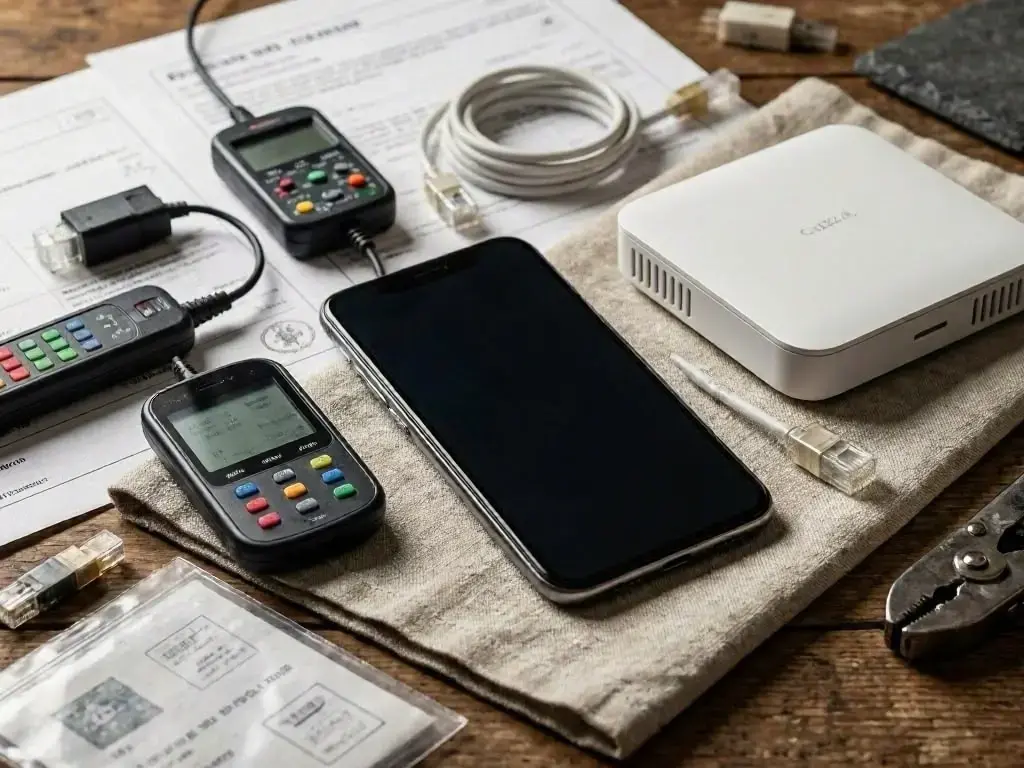
IEC Standards are global rules made by the International Electrotechnical Commission. They keep electrical and electronic products safe. They also help products work well together. IEC Standards cover items like home appliances, factory machines. And green energy setups. They give makers, regulators. And labs a shared set of rules.
Category
International technical standards
Used for
Product safety, performance. And interoperability
Common confusion
Often mistaken for regional standards like ETSI or ANSI
Also called
International Electrotechnical Commission Standards, IEC Technical Standards
Often discussed with
CERTIBRIDGE type approval services, Telecommunication devices certification

IEC Standards are technical guidelines published by the International Electrotechnical Commission (IEC), an organization that brings together experts from over 170 countries. These standards cover a wide range of electrical and electronic technologies, including power generation, transmission, consumer electronics, medical devices. And renewable energy systems. The goal of IEC Standards is to ensure that products are safe, reliable. And compatible with other devices, regardless of where they're manufactured or used.
Related glossary terms: Conformity Assessment, ISO/IEC 17025, RF Testing.
Unlike regional standards that apply only to specific countries or markets, IEC Standards are designed for global use. This means a product tested to an IEC Standard in one country can often be accepted in another without requiring additional testing. For example, a solar panel tested to IEC 61215 can be sold in Europe, Asia. And Africa with minimal regulatory hurdles. This global approach reduces costs for manufacturers and helps consumers access safer, higher-quality products.
IEC Standards are developed through a consensus-based process involving experts from industry, government, academia. And consumer groups. These experts review scientific data, technological trends. And real-world use cases to create standards that reflect current best practices. Once published, IEC Standards are regularly updated to keep pace with advancements in technology. For instance, IEC 62368, which covers audio/video and information technology equipment, replaced older standards like IEC 60950 to address modern safety risks like lithium-ion batteries.
Manufacturers use IEC Standards to guide product design, testing. And certification. A typical workflow involves selecting the relevant standard for a product, conducting laboratory tests to verify compliance. And obtaining certification from an accredited body. For example, a manufacturer of electric vehicle chargers might test their product to IEC 61851 to ensure it meets safety requirements for electrical connections. Testing labs use specialized equipment to measure factors like electrical insulation, electromagnetic compatibility. And environmental durability, comparing results against the thresholds set by the standard.

IEC Standards play a critical role in protecting consumers, workers. And the environment. By setting clear requirements for product safety, they reduce the risk of electrical shocks, fires. And other hazards. For example, IEC 60335 ensures that household appliances like refrigerators and washing machines operate safely under normal conditions. While IEC 62479 addresses the risks of electromagnetic fields from electronic devices. Without these standards, manufacturers might cut corners on safety, leading to higher rates of accidents and product failures.
Many projects start with For businesses, IEC Standards provide a competitive advantage by enabling market access. Many countries require products to comply with specific IEC Standards before they can be sold. For instance, the European Union’s Low Voltage Directive references IEC 60335 for household appliances. While the U.S. Often aligns its standards with IEC benchmarks. By designing products to meet IEC Standards from the outset, manufacturers can avoid costly redesigns and delays when entering new markets. And compliance with IEC Standards can boost a company’s reputation, demonstrating a commitment to quality and safety.
IEC Standards become especially important during key stages of a product’s lifecycle, including design, certification. And market entry. During the design phase, engineers rely on IEC Standards to identify safety requirements and performance benchmarks. For example, a company developing a new medical device might reference IEC 60601 to ensure the product meets strict electrical safety requirements for use in hospitals. Skipping this step can lead to costly recalls or legal liabilities if the product fails to meet regulatory requirements.
IEC Standards also matter when products are tested for certification. Testing labs use these standards to evaluate whether a product meets the necessary criteria for safety, performance. And interoperability. For instance, a wireless router might be tested to IEC 62368 to verify that it handles electrical and fire risks appropriately. Finally, IEC Standards are critical during market entry, as many countries require proof of compliance with specific standards before products can be sold. In Madagascar, for example, telecom and electrical products often need to meet IEC-based requirements as part of the type approval process.
ETSI Standards focus on telecommunications and digital technologies. While IEC Standards cover electrical and electronic safety and performance across a broader range of industries.
ISO Standards address quality management, environmental practices. And other business processes, whereas IEC Standards specifically target electrical and electronic technologies.
ANSI Standards are primarily used in the United States and may align with IEC Standards but are not automatically accepted globally like IEC Standards.
While IEC Standards provide a global framework, local regulators may adapt or supplement them with additional requirements. Always confirm whether a country’s type approval process accepts IEC compliance directly or requires extra testing.
A maker of factory motors builds them to meet IEC 60034. This rule sets needs for spinning electrical machines. The maker sends samples to a lab. Engineers check things like wire strength, heat. And power use. After passing, the maker gets a report. They use it to sell motors in places like Madagascar, Europe. And Southeast Asia.
Conformity Assessment is a systematic process that determines whether a product, service, system. Or person meets specified requirements, standards. Or regulations. It includes activities like testing, inspection, certification.
ISO/IEC 17025 is an international standard that specifies the general requirements for the competence, impartiality. And consistent operation of testing and calibration laboratories. Laboratories accredited to ISO/IEC 17025 demonstrate their ability to produce precise, accurate.
RF Testing checks radio signals from wireless devices. It makes sure they meet rules for safety and speed. It also stops signals from mixing with others. Tests look at signal strength, frequency. And how clear the signal is.
EMC Testing checks if a device sends too much noise. It also checks if the device works well near other devices. This testing makes sure products work right in real places. Many laws say products must pass before they can be sold.
Type Approval is a formal certification process that confirms a product model meets specific technical and regulatory standards set by a government or industry authority. Type Approval ensures the product is safe, compatible.
CERTIBRIDGE
Contact CERTIBRIDGE for practical guidance on IEC Standards and related type approval services work in Madagascar.